sales@titaniscm.com
/ administration@titanscm.pro
0086-771-5592620
message
1

PRODUCTS
Product display
Current position:
home
REFRACTORY & INSULATION DIVISION
PRODUCTS
Monolithic Refractory Division
detail
Refractory Casting Cement
Product Introduction
Refractory castable cement usually refers to aluminate cement, which is a hydraulic cementitious material made of bauxite and limestone, calcined to produce clinker with calcium aluminate as the main component and about 50% alumina content, and then ground. It has the following characteristics: High refractoriness: The refractoriness is not less than 1580°C, and it can maintain good stability in high temperature environment. Rapid early strength development: Its main mineral component, calcium aluminate, has high hydraulic activity. Although it does not set very fast, it hardens quickly. The strength in 1 day can reach about 80%-90% of the maximum strength, which can make the refractory castable quickly combine and accelerate coagulation. Good high temperature resistance: At high temperature, its strength will not only not drop significantly, but will increase due to the formation of a stable ceramic phase. It can generally withstand high temperatures of 1300-1400℃. Strong chemical corrosion resistance: It has a certain resistance to some acidic and alkaline media, and can maintain relatively stable performance in relatively harsh chemical environments.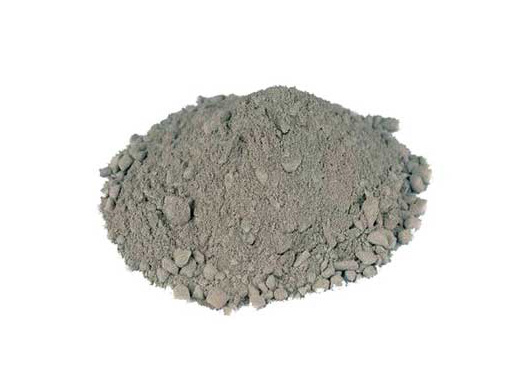
Product Application
Industrial kiln lining: high-temperature industrial kilns in various industries such as blast furnaces, hot blast furnaces, heating furnaces, boilers, and pellet furnaces can be made into refractory castables for repairing and integral casting of furnace linings to protect the kiln shell and extend the service life of the kiln. Emergency repair projects: In the emergency repair of buildings or infrastructure damaged by natural disasters, its early high-strength characteristics are used to quickly obtain sufficient strength for the repaired parts and restore some of the functions. Winter construction: In the cold winter, the coagulation and hardening speed of ordinary silicate cement will slow down or even cause freezing damage, while refractory castable cement is less affected by low temperature, which can ensure normal construction in low temperature environments and improve project progress. Chemical corrosion-resistant facilities: In the construction of some facilities such as ground and tanks that require chemical corrosion resistance, it resists certain acid and alkali corrosion to ensure the long-term stable operation of the facilities.top